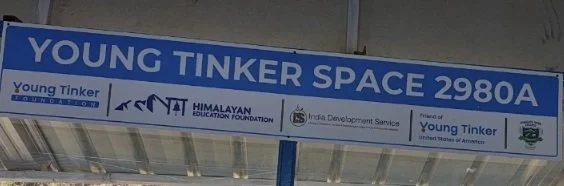
Innovation in the Himalayas: How One Program is Turning Students into Problem-Solvers
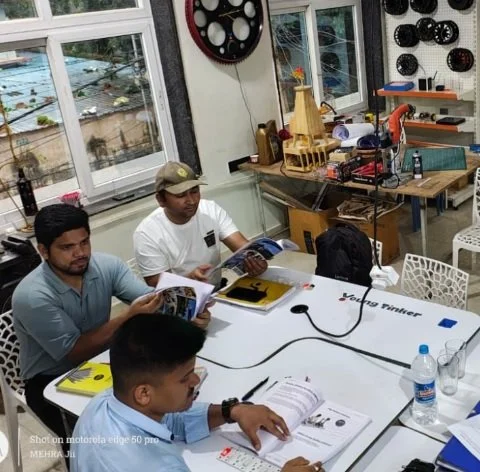
In a world increasingly driven by technology, the gap between theoretical textbook knowledge and practical, real-world skills is widening. This is the challenge the Young Tinker program was designed to address. Far more than just a classroom syllabus, Young Tinker is an innovation-based learning movement committed to teaching essential STEM (Science, Technology, Engineering, and Mathematics) skills through pure, hands-on activity. Its fundamental goal is to encourage children to think creatively, invent solutions, and truly "learn by doing," shifting the focus away from simple memorization.
This powerful initiative is the brainchild of the Young Tinker Foundation, a dedicated educational non-profit based in Bhubaneswar, Odisha, led by its CEO and founder, Mr. Anil Pradhan. The foundation operates with a clear and ambitious mission: to democratize hands-on STEM learning, promote innovation and creativity in schools, provide modern technology support to rural and remote educational centers, and train teachers to become facilitators of practical, project-based education. They design the curriculum, deliver intensive training, and help establish crucial infrastructure—the Young Tinker Spaces—in schools across India.
A New Chapter in Chaukori
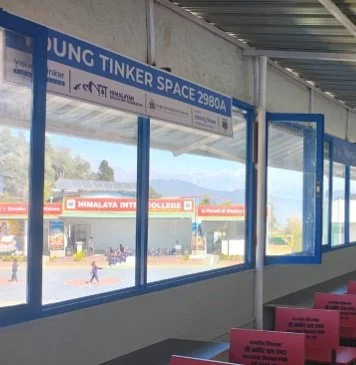
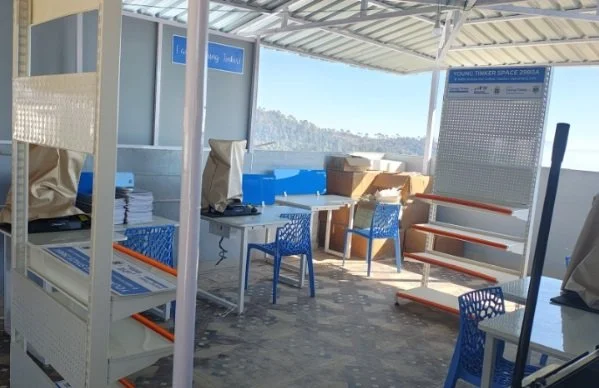
One of the most inspiring chapters in this mission is unfolding high in the mountains at Himalaya Inter College (HIC) in Chaukori. HIC has successfully established a Young Tinker Space (YTS) Lab on its campus, transforming its educational outlook. This creative, project-based environment is designed to empower students to become skilled problem solvers by integrating the STEM components, recognizing that innovation and creativity are vital components of successful innovation. It is here that traditional instruction is giving way to active exploration and building.
The establishment of this life-changing lab was not a solo effort. It was made possible through the generous collaboration of the Himalayan Education Foundation (HEF) and the India Development Service (IDS). HEF, in particular, has been instrumental in providing financial assistance, necessary equipment, resources, and continuous encouragement, ensuring HIC could deliver high-quality STEM education regardless of its remote location.
Young Tinkers Space
Bridging the Urban-Rural Divide
The need for a YTS at HIC was acute. As a school serving a remote Himalayan population, it was imperative to provide rural students with the same exposure to modern technology available in urban centers. The Tinkers Space is a deliberate effort to build creativity, confidence, and vital innovation skills, preparing students for future careers in science and technology. By developing problem-solvers who can connect classroom learning with real-world applications, HIC intends to guide its students to address challenges specific to their local community. The YTS is truly a major investment in transforming students into genuine thinkers, doers, and innovators.
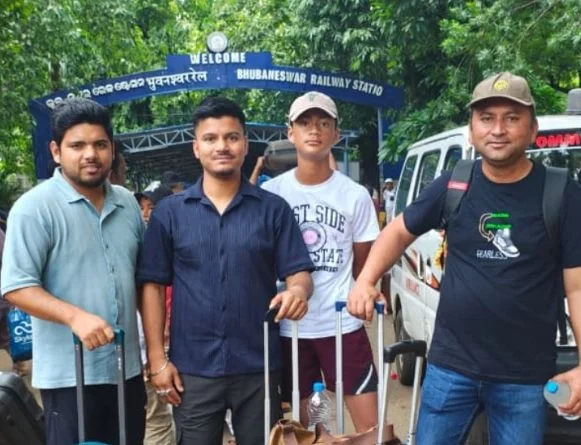
The team behind Young Tinkers Program at Chaukori
The success of the program rests on the shoulders of the dedicated trainers who have embraced this new pedagogy. HIC’s Young Tinker Space is managed by Mr. Manoj Mehra who is an alumnus of HIC and Mr. Narendra Singh Mahara, both of whom underwent a rigorous, one-week intensive hands-on training program at the Young Tinker Lab in Bhubaneswar. Their certification confirms their full authorization and skill set to conduct sessions covering everything from robotics, sensors, and coding with Arduino, to 3D designing, printing, and crucial tool handling.
The commitment is daily and consistent: every class from Grade 5 to Grade 10 attends a focused 45-minute session in the lab. These sessions are comprehensive, structured to develop both the theoretical and practical mind. Students learn essential soft skills like design thinking, research, observation, team collaboration, and critical problem-solving. Simultaneously, they gain deep technical skills through hands-on practice in basic and advanced electronics, microcontroller programming, 3D modeling with Tinkercad, 3D printing, soldering, and prototyping.
The ultimate vision for the Young Tinker Space at Himalaya Inter College is multifaceted. It aims to provide immersive STEM learning, develop creativity and innovation, and make students future-ready by equipping them with essential 21st-century skills. The program strives to improve student confidence by emphasizing project-building over textbook theory and guides students to work in teams, share ideas, and present their innovations. Critically, it seeks to connect learning with the local community by encouraging projects that tackle regional challenges, thereby cultivating a vibrant, enduring culture of curiosity and innovation throughout the entire school. The YTS is not just a lab; it is a launchpad for the next generation of Himalayan pioneers.